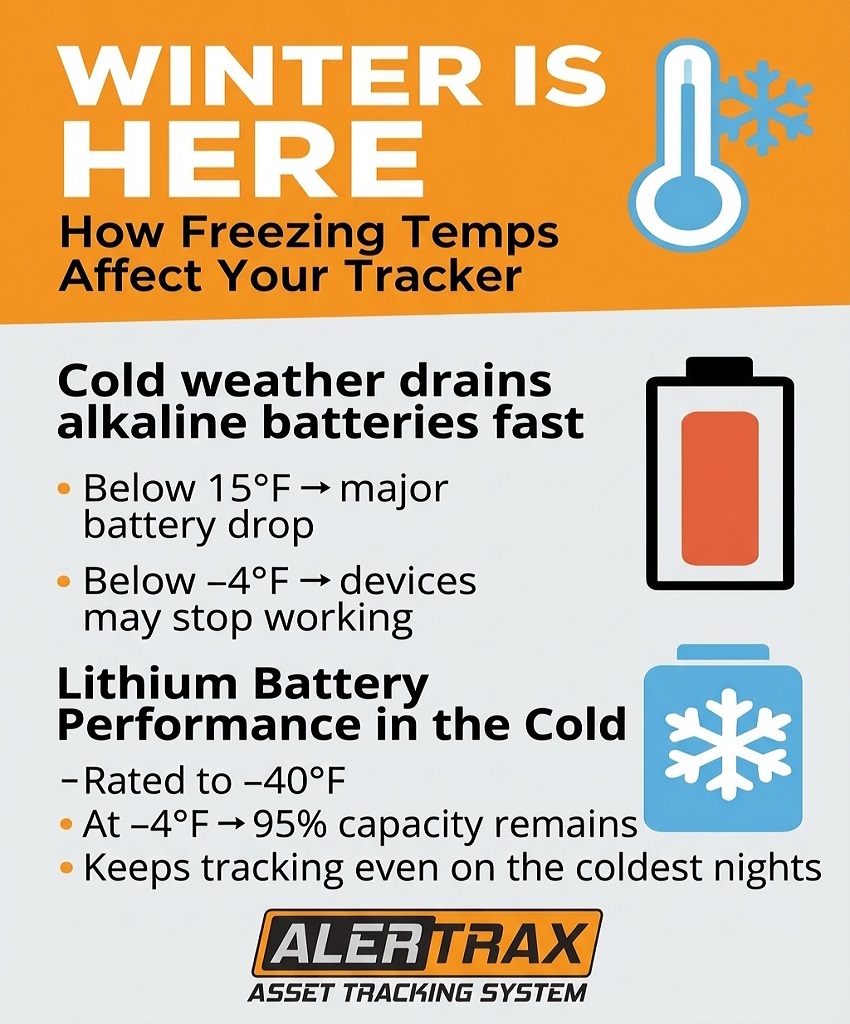
Winter has officially shown up and in a big way. Across the country, temperatures are dipping below zero, jobsite conditions are getting tougher, and equipment owners are starting to wonder the same thing:
“Will my GPS tracker still work when it’s this cold?”
It’s a fair question. Cold weather doesn’t just make our mornings harder it affects batteries, electronics, and every tool we rely on to keep work moving. So let’s break down what really happens when temperatures drop, what your AlerTrax device is built to handle, and when you should consider upgrading to cold-rated batteries.
How Cold Weather Affects Batteries
Most people don’t realize that batteries aren’t just storage units they’re chemical systems. And when temperatures fall, the chemical reactions inside the battery slow down. That slowdown reduces the available power and shortens the runtime of almost any device.
Here’s how it plays out in real life:
Above 32°F (freezing):
Standard alkaline batteries work fine. You may see a slight dip in life, but nothing major.
Below 15°F:
Alkalines start to struggle. Capacity drops significantly, and voltage can dip below what electronics need to operate.
Below –4°F:
Many devices stop functioning entirely because the battery chemistry simply can’t keep up.
If you’ve ever tried to use a headlamp or flashlight on a freezing morning and watched it fade instantly, you’ve seen this in action.
So What Does This Mean for Your AlerTrax Device?
The good news : AlerTrax is designed for real-world conditions including winter.
While alkaline batteries struggle in the cold, the lithium batteries we ship with every AlerTrax device are rated down to 40°F. That’s not a typo. These are the same class of batteries used in high-altitude sensors, ice-fishing electronics, and rescue equipment.
Here’s what that means for you:
- At 4°F, lithium batteries still hold about 95% of their capacity.
- Your tracker continues to operate normally even when left outside overnight.
- You won’t wake up to a dead device just because the temperature dipped.
So if you’re in a region that sees real winters sustained freezes, overnight lows in the single digits, or extreme cold snaps lithium isn’t just nice to have. It’s essential for accurate, reliable tracking.
Why Alkaline Batteries Aren’t Enough in Deep Winter
We occasionally hear from customers in warmer states who use alkaline batteries and don’t notice any issues all year. And that’s perfectly fine for them. But for anyone in northern states or mountain regions, it’s a different story.
Winter can reduce an alkaline battery’s capacity by more than half, which means:
- Slow updates
- Shorter device runtime
- Dropouts during the coldest parts of the night
- Sudden device shutdowns even when the battery should still have life left
And that’s the last thing anyone wants when protecting a trailer full of tools, a skid steer sitting overnight on a jobsite, or a work truck at a remote location.
Cold Weather Isn’t Going Away But Battery Problems Can
The winter season brings enough challenges frozen locks, delayed starts, slippery jobsites, equipment slow to warm up. Your tracker shouldn’t be one of those problems.
With AlerTrax’s lithium power system rated down to 40°F, you can trust that :
- Your device will survive brutal temperatures
- Your location updates will stay accurate
- Your protection doesn't take a night off just because the weather’s rough
The world doesn’t stop working in the winter and neither should your GPS tracker.
Have Questions About Battery Performance?
If you’re unsure which battery type you’re currently using, or want to switch to lithium for winter, our team can help.
Just reach out we’re here to keep your equipment protected in every season.